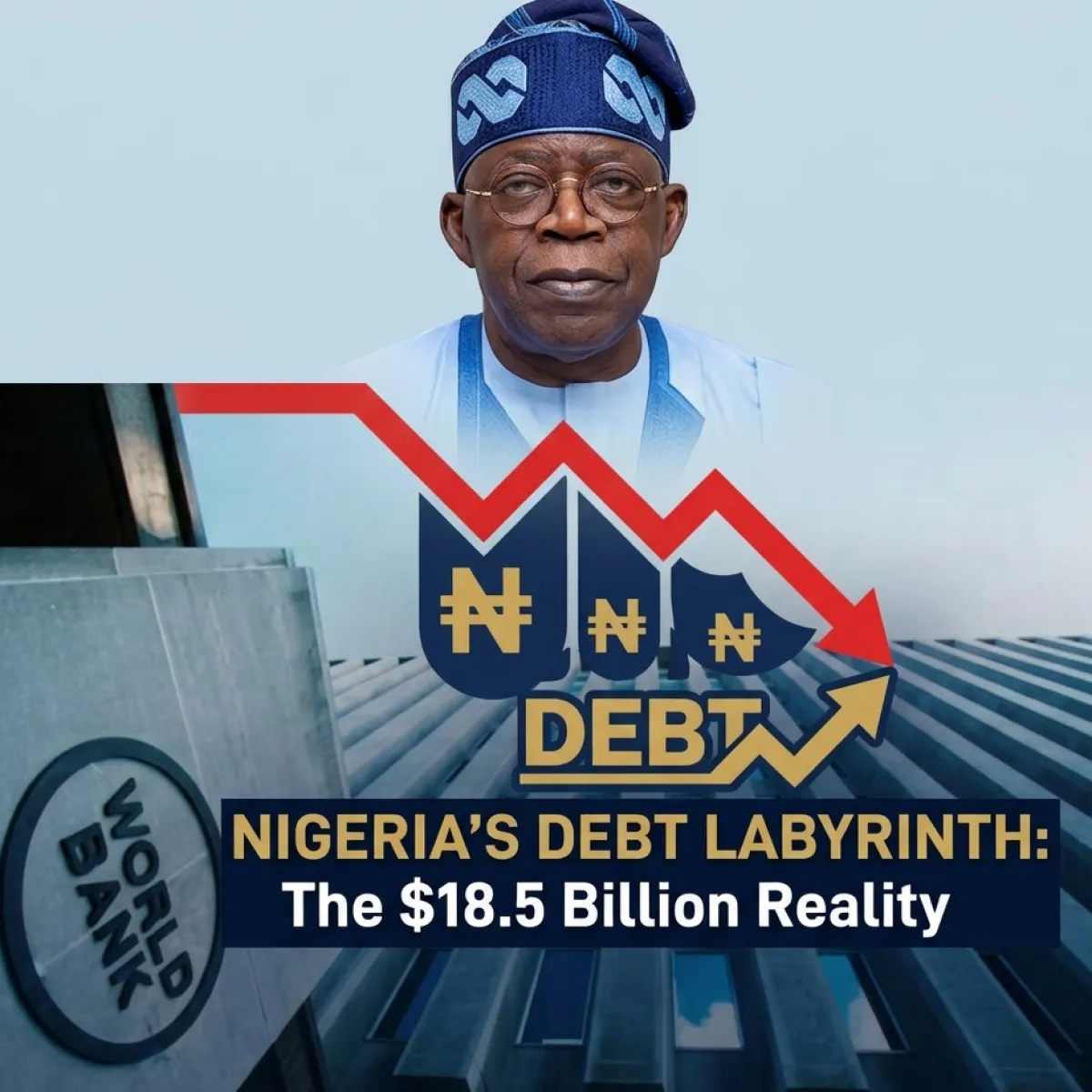
The news surrounding Nigeria’s position as the World Bank’s third-largest borrower with a staggering $18.5 billion loan portfolio has moved past being "concerning", it is now alarming. While the country’s needs are undeniable, the rapid acceleration of loans under President Bola Tinubu’s administration highlights a brutal paradox: the government is accumulating more debt, yet the average citizen is getting poorer. Rising Debt, Falling Purchasing PowerSince taking office, the Tinubu administration has aggressively pursued multiple billions in fresh external financing.
Concurrently, the government implemented aggressive structural adjustments, including the removal of fuel subsidies and the unification of the exchange rate. While these moves were hailed by global lenders as "economically rational," the immediate reality on the ground has been a massive cost-of-living crisis: Skyrocketing Inflation: Daily food prices and baseline utility costs continue to surge out of reach for regular families.Eroded Purchasing Power: The steep drop in the Naira has systematically vaporized the purchasing power of millions, crippling small businesses and local manufacturers. The central question remains unaddressed: If the nation is continuously taking on trillions of Naira in fresh debt, why is life consistently getting harder for the vast majority? The Infrastructure MirageHistorically, borrowing is justified by the promise of building long term, wealth-generating assets, such as power grids, standardized transport networks, and advanced healthcare. Instead, Nigeria's public infrastructure remains heavily decayed or stagnant, leaving citizens to wonder if new loans are simply being swallowed to service old debts and cover up deeper systemic fiscal failures.
[ New External Loans ] ──► [ Opaque Financial Channels ] ──► [ Missing/Unaccounted Billions ]
│
(No Visible Infrastructure Impact)
The World Bank's Ominous Discovery: The Missing Billions Compounding the public's frustration are recent global findings exposing severe structural leaks. The World Bank itself recently called attention to massive, multi-billion-naira disconnects in Nigeria’s fiscal architecture, flagging instances where significant revenue and loan allocations simply could not be cleanly accounted for. Civil society organizations and political watchdogs have pointed to these reports as proof of an opaque financial system highly vulnerable to systemic diversion and reckless spending. When enormous portions of national wealth and incoming capital are deducted or handled outside proper legislative scrutiny, transparency becomes an impossibility. “We cannot continue on a path where rising revenues and massive loans coexist with deepening poverty. When the ledger books are full but the citizens are empty, it raises serious questions about where the money is truly going.”A Systemic Crossroads Nigeria can no longer afford to treat governance as an exercise in debt accumulation without building matching productive capacity. Relying on temporary loan cushioning while the foundational economic floor collapses underneath ordinary families is unsustainable. For the current administration to steer the country out of this financial labyrinth, borrowing must stop being a political knee-jerk reaction. There must be a ruthless, audited shift toward genuine infrastructural investment, alongside an immediate end to the opacity masking the nation's true accounts. Otherwise, Nigeria risks entirely mortgaging the future of its next generation just to keep its current machinery afloat.
https://guardian.ng/news/world-bank-report-exposes-nigerias-missing-billions-atiku/
Regardless of where one stands on the issue, it is crucial that there is transparency and accountability in the utilization of these funds. Public scrutiny and efficient resource allocation are essential to ensure that the borrowed money actually benefits the average Nigerian and doesn't get lost in a labyrinth of bureaucratic inefficiency or corruption.
As Nigeria navigates this financial landscape, it's essential that policy makers and citizens alike remain vigilant and critically evaluate the impact of this debt on the country's future. Only time will tell if this strategy will yield the desired results or if it will lead to a deeper crisis.
https://guardian.ng/news/fresh-1-25b-world-bank-loan-for-tinubu-administration-is-alarming-adc/