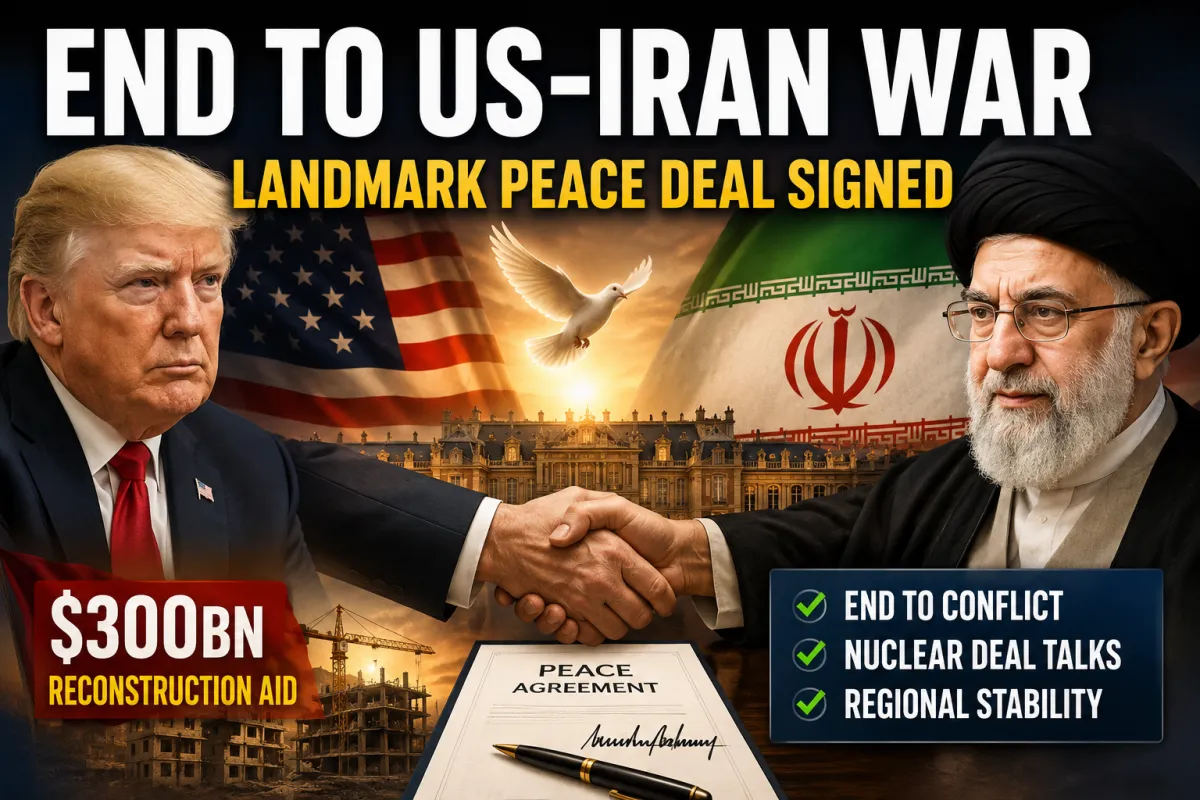
The United States and Iran have taken a major step toward ending months of hostilities after signing a landmark peace memorandum aimed at restoring stability in the Middle East.
US President Donald Trump confirmed the agreement on Wednesday, telling reporters, “Just signed it,” moments after leaving the Palace of Versailles in France, where G7 leaders had gathered. The signing took place during a formal dinner, marking a dramatic diplomatic shift following months of military confrontation.
The memorandum outlines a framework to halt further fighting, restart negotiations over Iran's nuclear programme, and support the country's post-war recovery. It also proposes a reconstruction package reportedly worth up to $300 billion, alongside measures to improve regional security and revive international trade routes affected by the conflict.
Another key objective of the agreement is addressing concerns over Iran's nuclear ambitions through renewed diplomatic engagement, while creating a path toward easing tensions that have shaken global energy markets and heightened fears of a wider regional war.
Although the memorandum is not yet a final peace treaty, world leaders have welcomed it as a significant breakthrough that could reduce instability in the Middle East and open the door to broader diplomatic negotiations in the coming weeks.
Analysts, however, caution that the success of the agreement will depend on both nations fulfilling their commitments, with implementation expected to be closely monitored by international partners.
If fully carried out, the deal could mark the beginning of a new phase in US-Iran relations, offering hope for lasting peace after one of the region's most turbulent periods in recent years.